


MIRACLE: mapping the impacts of congenital diaphragmatic hernia on adolescent cardiorespiratory health
2026-2027
Informations

 2026 winnerPower Corporation of Canada Innovation GrantNational Competition for Young Researchers
Where the project stands
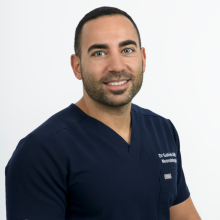
Dr. Gabriel Altit
Thanks to advances in care, most babies born with a congenital diaphragmatic hernia survive. But what becomes of them in adolescence? MIRACLE creates Quebec’s first follow-up of these young people, to detect heart, lung and kidney problems early.
2.6births per 10,000 affected by congenital diaphragmatic hernia
2centres brought together, the Montreal Children’s Hospital and CHU Sainte-Justine
30survivors and 30 friend controls of the same age
The project in detail
The diseaseAn opening in the diaphragm lets abdominal organs move up into the chest, which disrupts the development of the lungs, pulmonary vessels and heart.
The blind spotMost of these children survive today, but what becomes of them after pediatric follow-up remains largely unknown.
The projectA first Quebec platform for in-depth follow-up of adolescents aged 14 to 18 born with this malformation.
The visitHeart ultrasound, lung function, kidney and vascular ultrasound, blood tests, a walking test and quality-of-life questionnaires.
The friend controlEach young person invites a friend of the same age to take the same tests. This innovation makes comparisons fairer, because the two share a similar environment and lifestyle.
The teamDr. Gabriel Altit, researcher at the Research Institute of the MUHC, associate professor at McGill University and founder of NeoCardioLab, leads the project with Dr. Anie Lapointe, neonatologist at CHU Sainte-Justine. A parent partner has been involved since the protocol was designed.
The steps
2026 · The Foundation’s supportThe project wins the Power Corporation of Canada Innovation Grant at the 4th National Competition for Young Researchers.
Fall 2026 · Getting under way We are hereHarmonizing the protocol between the two centres, ethics approvals and staff training, then the start of recruitment. Thirty-five eligible adolescents have already been identified at the MUHC.
Next · The visitsAssessments of the young people, pooling of data from the two centres and first analyses.
Until 2028 · What comes nextThe results will serve as the basis for a larger, lifelong study.
What it changes for young people
Detect the invisibleIdentify hidden heart, lung, kidney and metabolic problems in adolescents who seem to be doing well.
A successful move to adult careData to build follow-up after pediatrics, where these young people are currently left without guidance.
Equity for a rare diseaseA sustainable, low-cost monitoring model built on existing clinics.
To learn more
BACKGROUND
Congenital diaphragmatic hernia affects about 2.6 births per 10,000. An opening in the diaphragm lets abdominal organs move up into the chest, which disrupts the development of the lungs, pulmonary vessels and heart. Thanks to advances in care, most of these children survive today, but what becomes of them beyond pediatric follow-up remains largely unknown.
THE PROJECT
MIRACLE sets up Quebec’s first multicentre platform for in-depth follow-up of adolescents aged 14 to 18 born with this malformation. Thirty survivors and thirty friend controls of the same age will have a full assessment of the heart, lungs, kidneys and vessels, with blood tests, a walking test and quality-of-life questionnaires.
POTENTIAL IMPACT ON CHILDREN’S HEALTH
The project documents, for the first time in Quebec, the health of these survivors into adolescence. It lays the groundwork for lifelong follow-up of young people whom medicine used to lose track of after childhood.
Research on congenital diaphragmatic hernia
This project is part of the research on congenital diaphragmatic hernia supported by the Pediatric Research Foundation in Quebec.
Other projects in Metabolic and cardiovascular health
- Influence of early sport participation profiles on physical activity trajectories in adolescence
- OPEN-D: Onboarding Platform for the Education of New patients with Diabetes. A personalized chatbot for children with type 1 diabetes (T1D) and their families
- An innovative approach to studying human milk in the context of gestational diabetes: using a mammary gland organoid model
Informations

Principal researcher
- Dr. Gabriel Altit, Research Institute of the MUHC, McGill University
Collaborators
- Dr. Anie Lapointe, CHU Sainte-Justine
Research Center
- Centre universitaire de santé McGill - CUSM
Funded year
2026-2027
Project category
- Metabolic and cardiovascular health
- Perinatal, neonatal and obstetrics