


The Pediatric Research Foundation podcast
To act, you have to understand. And to understand, you have to look closely.
Hosted by Andréanne Théberge, MICROSCOPE gives the floor to the people who are changing children’s lives, one discovery at a time. Researchers and families share true, intimate and powerful stories. Episodes are recorded in French.
Now playing
The latest episode

Tough Mountie Challenge special
Episode 9
Samuel Hébert and the Tough Mountie Challenge: running to find yourself again
A kinesiologist, coach and athlete, Samuel Hébert has been a Challenge ambassador for nearly eight years. He talks about what running changed in him, and why pediatric research became a personal cause after the birth of his son Charlie.
All episodes
One study, one conversation, one story
Each episode starts from a project supported by the Foundation and brings science and lived experience to the same table.

Episode 8
Patrick Beaulé at the Tough Mountie: turning challenges into impact
The Tough Mountie Challenge explained: why hundreds of people take part every year and how it funds pediatric research.
With Patrick Beaulé, honorary president of the Tough Mountie Challenge in Montreal, Canadian enduro champion and entrepreneur.

Episode 7
Transgender youth: toward more humane, better-adapted care
The PARLONSMAAT project studies the effects of gender-affirming care on the health and well-being of transgender adolescents.
With Dr. Nicholas Chadi, pediatrician and clinician-researcher, and Pascale Drevillon, artist, actor and director.

Episode 6
Anxiety and depression in young people: a challenge research is taking on
How anxiety and depression unfold in young people, tracked through large Quebec cohorts, to know when to step in.
With Prof. Geneviève Morneau-Vaillancourt of Université de Sherbrooke, and Lionel Carmant, neurologist and Member of the National Assembly for Taillon.

Episode 5
Childhood epilepsy: Léo’s fight and the advances in research
Drug-resistant epilepsy in children, and the brain network mapping that could make surgery more precise.
With Prof. Sara Larivière, Dr. Aristides Hadjinicolaou and Frédéric Dorval-Laforest, Léo’s father.

Episode 4
Reducing polarization and supporting young people’s well-being
A pilot project of creative workshops in Quebec high schools to reduce polarization, distress and violence among young people.
With Dr. Cécile Rousseau of McGill University, and Rodley Pitt.
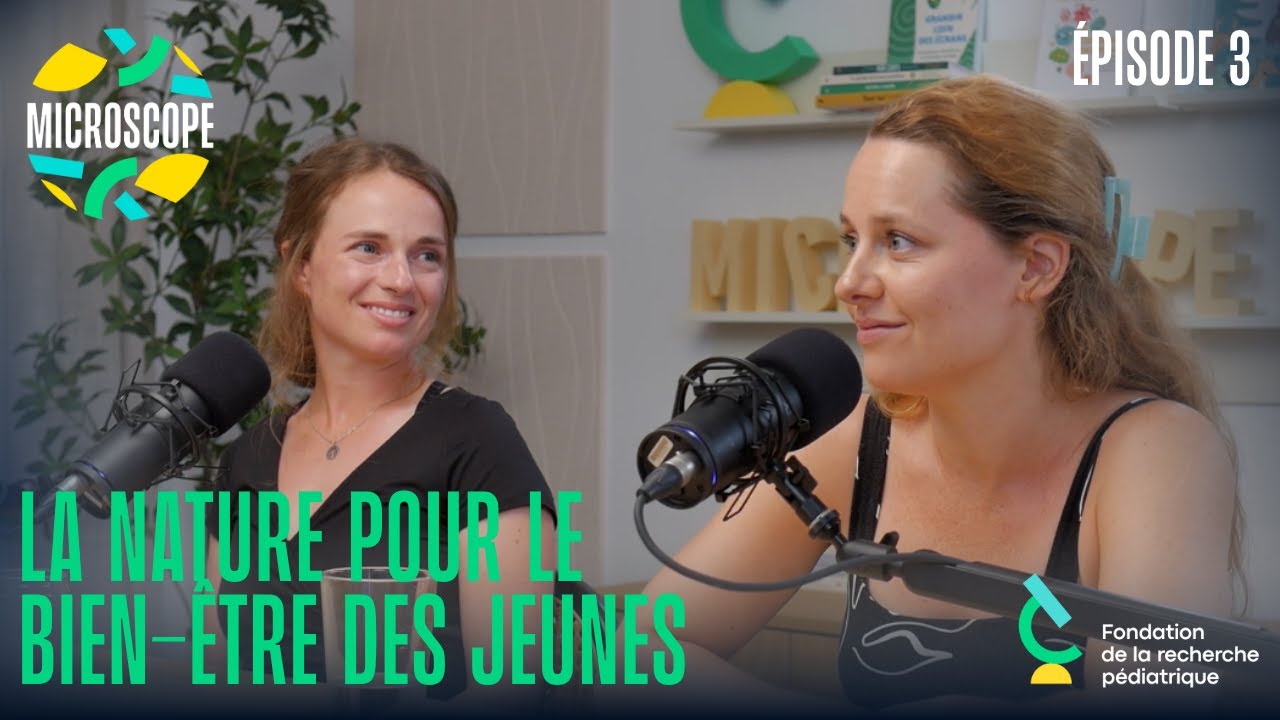
Episode 3
Nature for young people’s well-being
Nature and adventure interventions as concrete support for adolescent mental health.
With Véronique Parent, psychologist and professor, Sarah-Blanche Racine of the Horizon 4 saisons program, and Lauren Hartley, actor and author.

Episode 2
Toward neuroinclusive high schools
How to make high school more welcoming for neurodivergent students, and what the idea of double empathy changes in a classroom.
With Marie Grandisson, occupational therapist and professor at Université Laval, and actor Frédéric Millaire-Zouvi.

Episode 1
Premenstrual dysphoric disorder
Premenstrual dysphoric disorder (PMDD) affects tens of thousands of teenage girls in Canada and remains largely unrecognized.
With Sarah Rodrigue, author of Maudites hormones, and Prof. Jean-François Lepage, researcher and neuropsychologist.

Host
Andréanne Théberge
Actor, director and science journalist
Known for her roles in Quebec series such as L’Échappée, Toute la vie and Faits divers, she has for several years combined acting with a broader creative practice that spans writing, directing and hosting.
Trained in theatre at Collège Lionel-Groulx, then in screenwriting and documentary directing at INIS, she is behind thoughtful, socially engaged projects. She created and directed Natures humaines (ICI Tou.tv), made the youth web series Famille magique (Radio-Canada) and, more recently, the documentary series SPM : splendeurs, peines et mystères du cycle menstruel, which she co-hosts, writes and directs.
Her curiosity and sensitivity, together with her rigour and her gift for listening, make her the ideal voice for the stories of MICROSCOPE.
Why a podcast
Science, told by the people who live it
Behind every research project is a question a parent has already asked. MICROSCOPE takes the time to answer it, without jargon and without shortcuts.
- A researcher explains the project and what it could change.
- Someone directly affected describes what the illness or disorder means day to day.
- A frank conversation that connects discoveries to the families waiting for them.
After listening
You listened. You can act, too.
Every project featured on MICROSCOPE exists thanks to donations made to the Foundation. Yours helps research move faster.
So you never miss an episode