


Study on the impact of medical care among transgender adolescents
2023-2024
Informations

Where the project stands
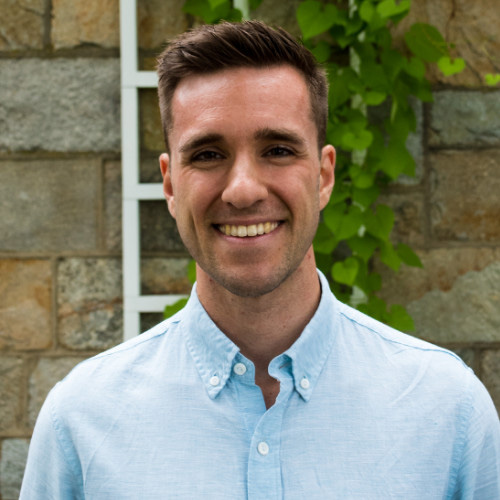
Dr. Nicholas ChadiPediatrician in adolescent medicine at CHU Sainte-Justine and associate professor at the Université de Montréal
PARLONSMAAT is the first large-scale longitudinal study in Canada on gender-affirming care for adolescents. It follows over time the young people seen at the CHU Sainte-Justine gender diversity clinic, with a committee of youth and parents at the table.
Nearly 100young people are now part of the cohort
4hospital centres brought together in a provincial team
750patients or so are followed each year at the clinic, the only specialized French-language clinic in Quebec
The project in detail
The contextBetween 0.8% and 2.7% of adolescents in North America are transgender or gender diverse. They experience two to three times more mental health challenges than their peers. The short-term benefits of gender-affirming care are documented, but its medium- and long-term effects remain little known, because existing studies rely on small samples and short follow-ups.
The questionWhat is the effect of gender-affirming care on the health and well-being of transgender adolescents, measured over several years?
The methodAll young people aged 8 to 18 who begin care at the clinic can take part. The team reviews their medical file and has them fill out questionnaires every six months.
Participatory researchA committee of youth and parents accompanies the project. The hospital’s patient partnership office named it a favourite project.
The teamDr. Nicholas Chadi co-leads the interdisciplinary gender diversity clinic at CHU Sainte-Justine. He conducts the study with Dr. Lyne Chiniara, co-principal investigator, and with Prof. Annie Pullen-Sansfaçon, Dr. Laurence Arsenault-Blanchard, Prof. Kevin Lavoie and Dr. Diane Rottembourg.
What comes nextA second phase adds three streams. Early childhood, from 0 to 8 years. The transition to adult care, from 16 to 21 years. Young people in vulnerable situations.
The project journey
2024 · Support from the FoundationThe Foundation commits to supporting the project for three years.
June 2025 · A first summitThe team holds the first participatory research summit on gender-affirming care in Quebec, with 30 key stakeholders.
2025 · Green light and recruitmentThe protocol receives ethics approval in the summer and recruitment starts in the fall.
March 2026 · A published protocolThe study protocol appears in the American Journal of Epidemiology.
April 2026 · Podcast and new labThe project is featured in episode 7 of the Microscope podcast, with Dr. Chadi and artist Pascale Drevillon. It also gives rise to Pluréalités, a participatory research lab dedicated to the health and well-being of gender-diverse youth, led by Dr. Chadi.
2026 to 2027 · The second phase We are hereThe cohort is approaching 100 young people and the project is expanding to new age groups.
What it changes for young people
Data from hereA first portrait, followed over time, of the young people who receive this care in Quebec.
Youth and parents at the tableThose most directly concerned take part in the research choices.
Better informed decisionsResults to guide families, clinicians and decision-makers.
Microscope podcast · Episode 7 (in French)
Transgender youth, toward more humane and better adapted careWith Dr. Nicholas Chadi and artist Pascale Drevillon
Latest publications
It is estimated that about 0.5% of Quebec adolescents (2,500 adolescents aged 12 to 17) identify as transgender or non-binary, meaning that their felt gender identity does not match their biological sex. Among them, many will begin a gender affirmation process (transition) during adolescence. Although gender-affirming medical care, such as puberty blockers, hormones and surgeries, has been offered to transgender adolescents in specialized gender diversity clinics since the early 2000s, very few studies have described the impacts of this care on the physical health, mental health, well-being and quality of life of these adolescents. Existing research has generally studied small groups of adolescents over short periods, limiting the ability to fully understand the real effects of the treatments received. In addition, treatment recommendations are evolving rapidly and existing studies do not reflect current medical practice.
It is well known that transgender youth experience mental health problems, such as depression, anxiety, eating disorders and suicidal thoughts, at rates that are 2 to 3 times higher than in the general population. Transgender youth are also diagnosed with autism spectrum disorder 4 to 5 times more often than young people in the general population. In the short term, gender-affirming treatments have the potential to reduce the mental health problems experienced by transgender adolescents to levels similar to those of cisgender adolescents (whose gender identity matches their biological sex). However, the long-term effects of gender-affirming treatments on health and well-being remain unknown, given how new this approach is among adolescents. There is therefore a pressing need for longitudinal cohort studies, that is, studies that follow large groups of adolescents over a long period to better understand how they fare after their treatment.
The gender diversity clinic at CHU Sainte-Justine is the first interdisciplinary clinic in Quebec to offer medical care and free psychosocial support to transgender and non-binary children and adolescents aged 8 to 18. Founded in 2016, the clinic has already provided care and services to more than 500 children and adolescents and currently receives more than 250 new requests for consultation per year. The clinic combines the expertise of clinicians in adolescent medicine, pediatric endocrinology, general pediatrics, child psychiatry, gynecology, social work, nursing and psychology, and works closely with professionals in the health network, including partners in several Quebec hospital centres. The clinic also takes part in many research projects with researchers from the Université de Montréal and other centres of expertise in the rest of Canada and elsewhere in the world. With its patient volume, its interdisciplinary structure and its broad network of clinician and researcher partners, the CHU Sainte-Justine gender diversity clinic offers an ideal environment for a cohort study with transgender adolescents.
The PARLONSMAAT project aims to meet a pressing need to study the concrete effects of gender-affirming treatments on the health and well-being of transgender adolescents. Using an innovative research approach, participatory research, the research team will work closely, throughout the project, with transgender adolescents and their families to develop the research questions, carry out the project and analyze the results. This approach will make it possible to better interpret the findings and apply them to the lived experience of transgender youth and their families.
The specific objectives of the project will be to study 4 different aspects of gender-affirming care in pediatrics:
- The effects of puberty blockers and affirming hormones (e.g. testosterone and estrogen) on the physical and mental health of transgender adolescents;
- The impact of support from family and loved ones on the mental health and well-being of transgender adolescents;
- Differences in needs and care pathways between male and female transgender adolescents;
- The impacts of various demographic factors (e.g. language spoken, ethnicity, socioeconomic level) and developmental factors (e.g. autism spectrum disorder) on the care pathways of transgender adolescents.
Participants recruited for this study will be invited to fill out electronic questionnaires at regular intervals throughout their follow-up at the clinic and after they have transitioned to adult services. The questionnaires will make it possible to describe participants’ characteristics at their first consultation at the clinic and to follow changes in their physical health, their mental health (e.g. anxiety and depressive symptoms, suicidal thoughts) and their family and school functioning during and after their follow-up at the clinic. Laboratory tests (e.g. hormone tests), as well as medical prescriptions, surgeries and other treatments received (e.g. psychology or social work follow-up), will also be analyzed by the research team.
ORIGINALITY OF THE PROJECT
This project will lead to the creation of the largest research cohort of transgender adolescents in North America and the only cohort of its kind in Quebec. The unique research design, using a participatory approach in close collaboration with transgender adolescents and their families, will provide a quality of data not found in other existing studies and will take the interpretation of results further in order to improve the care offered to this population.
POTENTIAL IMPACT ON CHILDREN’S HEALTH
Given the large number of transgender children and adolescents in Canada (10,000 adolescents aged 12 to 17, according to the latest surveys and censuses), the PARLONSMAAT project will make it possible to identify the concrete impacts of gender-affirming care and to determine the best way to support transgender adolescents in order to promote their health, well-being and fulfilment. We anticipate recruiting 200 to 400 participants during the initial phase of the project (3 years), a number that could grow to more than 1,000 participants if the project continues for 5 more years. Our study will thus create a very large database that will make it possible to follow changes in the care received and participants’ long-term outcomes, and to validate best medical practices for supporting transgender adolescents. These data will help guide the creation and improvement of gender diversity clinics across Canada, given that current services remain limited and cannot meet the growing demand for this type of care.
POTENTIAL IMPACT ON STUDENT TRAINING
At least 4 students will be trained directly through this project. A master’s student will take part in the project for 2 years and will be supervised by the principal investigator. Three undergraduate or postgraduate trainees will also complete summer internships under the direction of the research team. Since an impressive amount of data will be collected, several predoctoral and postdoctoral students will also be able to join the research team.
POTENTIAL LEVERAGE
The funding received will allow the PARLONSMAAT cohort to establish itself as a pillar of research on the health of transgender adolescents in North America. Initially conducted in a single centre (CHU Sainte-Justine), the study could be extended to other partner sites (e.g. CHU de Québec, CHU de Sherbrooke) that are currently working to set up their own gender diversity clinics. The funding will also give the project the credibility needed to obtain major research grants that will ensure its sustainability.
Research on gender-affirming care for transgender adolescents
This project is part of the research on gender-affirming care for transgender adolescents supported by the Pediatric Research Foundation in Quebec.
Other projects in Neurodevelopment and mental health
Informations

Principal researcher
- Dr Nicholas Chadi, pédiatre et chercheur spécialisé en médecine de l’adolescence diplômé des universités McGill, de Montréal, de Toronto et Harvard.
Collaborators
- Annie Pullen-Sansfaçon PhD – Université de Montréal
- Diane Rottembourg MD – CHU de Sherbrooke
- Kevin Lavoie PhD – Université Laval
- Laurence Arsenault-Blanchard MD – CHU de Québec
- Lyne Chiniara MD MA – CHU Sainte-Justine
Research Center
- Centre de recherche du CHU Sainte-Justine
Funded year
2023-2024
Project category
- Neurodevelopment and mental health